
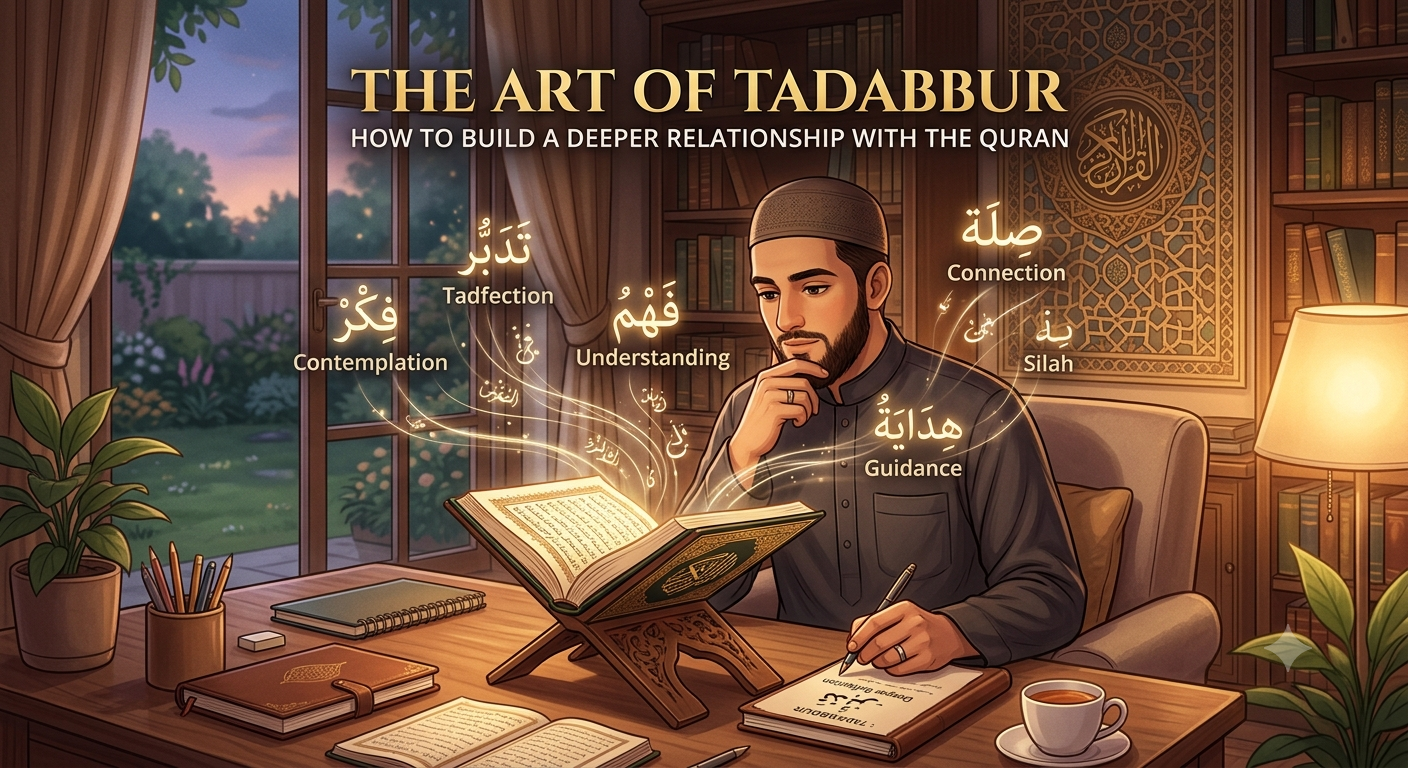
The Art of Tadabbur: Enriching Our Relationship With the Quran
The Quran is much more than a book to be recited—it is Allah’s guidance for humanity, filled with wisdom, mercy, and lessons for every stage of life. While many Muslims focus on completing the Quran, especially during Ramadan, true transformation comes through Tadabbur, the practice of deeply reflecting on its verses. Tadabbur helps believers move beyond simple recitation and develop a meaningful connection with the words of Allah by understanding, contemplating, and applying His guidance in everyday life. The Quran itself encourages believers to reflect on its verses so that they may receive guidance and strengthen their faith.
What Is Tadabbur?
The Arabic word Tadabbur means to reflect, contemplate, and carefully consider the deeper meanings of something. In the context of the Quran, Tadabbur is the process of thinking deeply about Allah’s words and allowing them to influence our hearts, minds, and actions.
Unlike simply reading the Quran, Tadabbur involves asking questions such as:
- What is Allah teaching me through this verse?
- How can I apply this lesson in my daily life?
- What does this verse reveal about Allah’s mercy and wisdom?
- How can this guidance improve my character?
The goal is not only to understand the words but also to live according to them.
Why Tadabbur Matters
The Quran repeatedly calls believers to reflect upon its verses rather than reciting them mechanically.
When Muslims practice Tadabbur, they begin to:
- Strengthen their relationship with Allah.
- Increase their faith (Iman).
- Improve their character.
- Find solutions to life’s challenges.
- Develop gratitude and patience.
- Grow spiritually every day.
Reflection transforms Quran recitation into a personal conversation with divine guidance.
Tadabbur Is Different from Tafsir
Many people confuse Tadabbur with Tafsir, but they serve different purposes.
Tafsir is the scholarly explanation of the Quran based on Arabic language, Hadith, and Islamic scholarship.
Tadabbur, on the other hand, is personal reflection after understanding the meaning of the verses. It focuses on how Allah’s guidance applies to one’s own life rather than producing scholarly interpretations.
The Quran Was Revealed for Reflection
Allah describes the Quran as a blessed Book sent so people may contemplate its verses and take guidance from them.
This reminds believers that the purpose of reading the Quran is not merely to finish its pages but to allow its teachings to transform their hearts and actions.
Common Misconceptions About Tadabbur
Many Muslims hesitate to practice Tadabbur because of misunderstandings.
You Must Be a Scholar
One common misconception is that only scholars can reflect on the Quran.
While scholarly interpretation requires extensive knowledge, every Muslim can thoughtfully reflect on verses they understand and consider how those teachings relate to their own lives.
Every Reflection Must Be Profound
Some people believe Tadabbur requires discovering entirely new meanings.
In reality, even a simple realization such as becoming more grateful, patient, or mindful of Allah is valuable reflection.
You Need Perfect Conditions
Others assume they must have plenty of free time or complete spiritual perfection before engaging with the Quran.
In reality, Tadabbur begins wherever you are.
Whether you read one verse or one chapter, sincere reflection is always beneficial.
Begin with the Right Intention
Every act of worship starts with sincerity.
Before opening the Quran, remind yourself that you are seeking Allah’s guidance rather than merely completing a reading target.
Ask Allah to:
- Open your heart.
- Increase your understanding.
- Help you implement His commands.
- Make the Quran a source of guidance.
A sincere intention greatly enhances the quality of reflection.
Read Slowly Instead of Rushing
Many people try to finish large portions of the Quran quickly.
While completing the Quran is rewarding, reading slowly often produces deeper understanding.
Instead of focusing only on quantity:
- Read carefully.
- Pause frequently.
- Repeat meaningful verses.
- Think about their message.
Sometimes one verse can change a person’s life.
Understand the Meaning
Reflection becomes easier when the meaning is understood.
If Arabic is not your first language:
- Read a trusted translation.
- Study brief Tafsir.
- Learn important Quranic vocabulary.
- Compare different translations when necessary.
Understanding opens the door to meaningful contemplation.
Ask Personal Reflection Questions
While reading, consider questions such as:
- What does this verse teach me?
- Which of Allah’s names appears here?
- What action is Allah encouraging?
- Which mistake is being warned against?
- How can I improve because of this verse?
These questions help transform reading into spiritual growth.
Keep a Quran Reflection Journal
Writing reflections helps strengthen your connection with the Quran.
You can record:
- Lessons learned.
- Inspirational verses.
- Personal goals.
- Daily reminders.
- Duas inspired by the verses.
Over time, these notes become a valuable record of spiritual growth.
Make Dua While Reading
The Prophet Muhammad (peace be upon him) would interact with the Quran during recitation.
When reading verses about mercy:
- Ask Allah for His mercy.
When reading about Paradise:
- Ask Allah to grant Jannah.
When reading warnings:
- Seek Allah’s protection.
This practice makes recitation more heartfelt and meaningful.
Remove Distractions
Meaningful reflection requires concentration.
Choose a peaceful environment where you can focus on Allah’s words.
Helpful habits include:
- Turning off notifications.
- Reading after Salah.
- Finding a quiet location.
- Reading without rushing.
Even fifteen minutes of focused reflection can be more beneficial than reading many pages absentmindedly.
Consistency Is Better Than Quantity
Building a relationship with the Quran requires consistency.
Even reading:
- One page daily,
- One verse thoughtfully,
- Or a few minutes of reflection
can produce lasting spiritual benefits over time.
Small, regular efforts often have a greater impact than occasional long sessions.
Apply What You Learn
The greatest purpose of Tadabbur is action.
After every reading session, ask yourself:
- What can I practice today?
- Which habit should I improve?
- Which sin should I avoid?
- Which good deed can I increase?
Knowledge becomes meaningful only when it influences behavior.
Benefits of Tadabbur
Developing the habit of Tadabbur brings numerous rewards.
These include:
- Stronger faith.
- Greater love for the Quran.
- Increased inner peace.
- Better decision-making.
- Improved patience.
- Closer relationship with Allah.
- Stronger character.
- Greater mindfulness in worship.
Over time, the Quran becomes a constant source of comfort, wisdom, and guidance.
Making Tadabbur a Lifelong Habit
Tadabbur should not be limited to Ramadan.
Throughout the year you can:
- Read a small portion daily.
- Study one Surah each month.
- Memorize verses with understanding.
- Discuss Quranic lessons with family.
- Attend Tafsir classes.
- Continue reflecting after every recitation.
A lifelong relationship with the Quran develops gradually through consistent effort.
Conclusion
The art of Tadabbur transforms Quran recitation into a journey of guidance, reflection, and personal growth. Rather than focusing solely on completing chapters, Muslims are encouraged to engage with the Quran thoughtfully, allowing its teachings to shape their character, strengthen their faith, and bring them closer to Allah. Every believer, regardless of their level of knowledge, can practice Tadabbur by reading with sincerity, understanding the meanings, asking reflective questions, and applying the lessons in daily life. Through consistent contemplation, the Quran becomes not only a book we read but a guide that illuminates every aspect of our lives.
Frequently Asked Questions (FAQs)
What is Tadabbur in Islam?
Tadabbur is the practice of reflecting deeply on the meanings of the Quran and applying its guidance to everyday life.
Is Tadabbur different from Tafsir?
Yes. Tafsir is the scholarly explanation of the Quran, while Tadabbur is personal reflection based on understanding its meanings.
Can beginners practice Tadabbur?
Absolutely. Every Muslim can reflect on Quranic verses according to their level of understanding while relying on authentic translations and Tafsir for accurate meanings.
Why is Tadabbur important?
It strengthens faith, deepens one’s relationship with Allah, improves character, and helps believers apply the Quran’s teachings in daily life.
How can I start practicing Tadabbur?
Begin by reading a few verses with a trusted translation, reflect on their meanings, ask how they apply to your life, and make dua for guidance.
Should I read Tafsir before doing Tadabbur?
Reading basic Tafsir is highly recommended because it helps you understand the intended meaning before reflecting on how to implement it.
Is Tadabbur only for Ramadan?
No. Although Ramadan is an excellent time to strengthen your connection with the Quran, Tadabbur should be practiced throughout the year.
What is the biggest benefit of Tadabbur?
The greatest benefit is developing a deeper relationship with Allah by allowing the Quran’s guidance to transform your thoughts, actions, and character.
Start Your Quran Journey with Makki Academy
If you’ve been thinking about building a stronger connection with the Qur’an, this is your moment.
Makki Academy is now helping students across Canada and other countries learn the Qur’an online with experienced teachers, flexible timings, and a supportive environment — all from the comfort of your home.
Whether you want to:
- Learn to read the Qur’an properly
- Improve your Tajweed
- Help your children start their Islamic journey
Makki Academy is here to guide you every step of the way.
The best part? You can start today with a FREE 3-day trial.
No commitment — just experience the quality of teaching yourself.
Don’t wait for “someday.”
Take the first step now and bring the Qur’an into your daily life.
Book your course today with Makki Academy and begin your journey with the Qur’an