
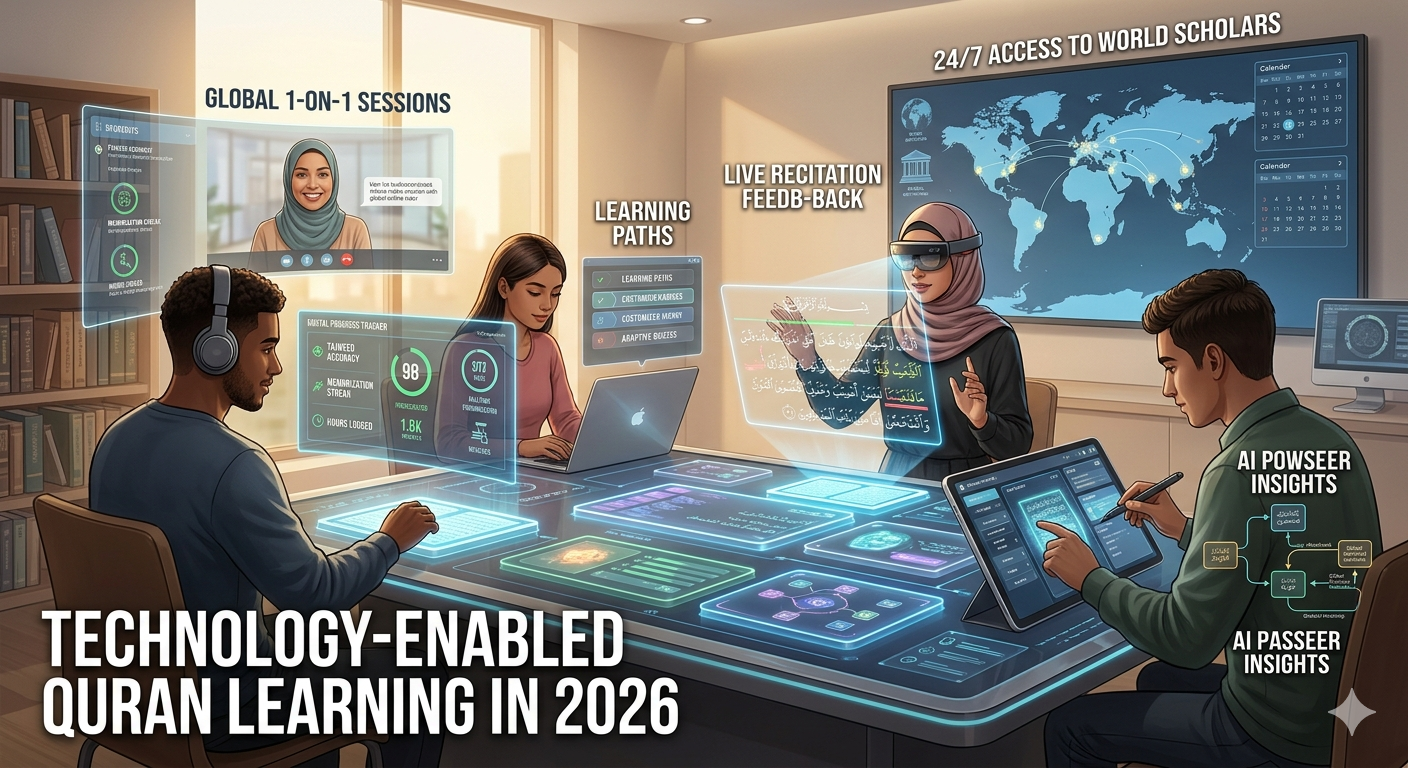
How Online Quran Platforms Use Technology for Better Learning
Online Quran platforms are transforming traditional Islamic education by combining classical Quran teaching with modern digital tools. In today’s world, students no longer need to rely only on physical madrassas or local teachers. Instead, they can learn Quran recitation, Tajweed, memorization (Hifz), and understanding through smartphones, laptops, and internet-based classrooms.
Technology has made Quran learning more accessible, flexible, and personalized for students of all ages. From live video classes to AI-based pronunciation correction tools, online Quran platforms are using advanced systems to improve learning outcomes while maintaining the spiritual essence of Quran education.
Rise of Online Quran Learning
Online Quran learning has grown rapidly in recent years due to increased internet access and the availability of digital education tools.
Key reasons for its popularity include:
- Easy access to qualified Quran teachers worldwide
- Flexible class schedules for students and working adults
- Learning from home without travel
- Affordable education compared to traditional setups
- Availability of recorded lessons for revision
Modern platforms now allow students to connect with expert teachers from different countries in real time, making Quran education global and inclusive.
Live Video Classes for Real-Time Learning
One of the most important technologies used in online Quran platforms is live video conferencing.
Through tools like Zoom or similar platforms, students can:
- Recite Quran directly to teachers
- Receive instant corrections
- Learn Tajweed rules step by step
- Ask questions during the lesson
- Build a strong teacher-student connection
This real-time interaction closely resembles traditional classroom learning but adds the convenience of remote access.
Digital Mushaf and Interactive Quran Tools
Many platforms now provide a digital Mushaf (online Quran) that includes advanced learning features.
These tools allow students to:
- Highlight verses for Tajweed rules
- Listen to audio recitations
- Read translations in different languages
- Add notes and bookmarks
- Search verses quickly
Interactive tools make it easier for students to understand meanings and improve recitation accuracy at the same time.
Artificial Intelligence in Quran Learning
Artificial intelligence is becoming an important part of modern Quran education.
AI-based systems can:
- Analyze pronunciation accuracy
- Detect Tajweed mistakes
- Provide instant feedback
- Track learning progress
- Suggest areas for improvement
These systems help students practice even outside class time. However, AI is used as a support tool, not a replacement for qualified Quran teachers.
Personalized Learning Experience
One major advantage of online Quran platforms is personalized learning.
Unlike traditional group classes, online systems allow:
- One-on-one teacher sessions
- Customized lesson plans
- Learning at individual speed
- Focus on weak areas
- Flexible revision schedules
This makes it easier for children and adults to learn according to their comfort level.
Mobile Apps for Easy Access
Mobile technology has made Quran learning even more accessible.
Through apps, students can:
- Practice daily recitation
- Listen to Quran audio anytime
- Revise lessons on the go
- Track memorization progress
- Receive reminders for practice
This ensures continuous learning even outside scheduled classes.
Progress Tracking and Performance Reports
Modern Quran platforms also include tracking systems that monitor student performance.
These systems help in:
- Recording attendance
- Measuring memorization progress
- Identifying mistakes in recitation
- Generating learning reports
- Setting learning goals
Parents can also monitor their children’s progress easily through dashboards and reports.
Cloud Technology for Better Accessibility
Cloud-based systems store lessons, recordings, and student data securely online.
Benefits include:
- Access from any device
- Safe storage of learning material
- Easy backup of lessons
- Seamless updates and improvements
This ensures students never lose their learning history and can continue anytime, anywhere.
Gamification to Improve Engagement
To make learning more engaging, many platforms use gamification techniques.
These include:
- Achievement badges
- Progress levels
- Daily learning streaks
- Interactive quizzes
- Reward systems
Gamification is especially helpful for children, as it keeps them motivated and consistent in their studies.
Audio Technology for Better Recitation
Audio tools play a key role in Quran learning.
Students can:
- Listen to expert reciters
- Record their own recitation
- Compare pronunciation
- Repeat difficult verses
- Improve Tajweed through listening practice
This helps develop accurate pronunciation and fluency in recitation.
Accessibility for Students Worldwide
One of the biggest benefits of technology in Quran education is global access.
Now students from:
- Remote areas
- Non-Muslim countries
- Busy urban lifestyles
- Different time zones
can all access qualified Quran teachers without geographical limitations.
Challenges in Online Quran Learning
Despite its benefits, online Quran learning also faces challenges:
- Internet connection issues
- Technical difficulties in apps or video calls
- Distractions at home
- Screen fatigue during long sessions
- Need for teacher training in digital tools
However, most platforms are continuously improving to solve these problems.
Importance of Human Teachers
Even with advanced technology, human teachers remain essential.
Teachers provide:
- Spiritual guidance
- Proper Tajweed correction
- Moral and religious understanding
- Emotional support
- Personalized mentorship
Technology enhances learning, but it cannot replace the wisdom and guidance of a qualified teacher.
Future of Online Quran Learning
The future of Quran education is expected to include even more advanced technologies such as:
- AI-powered virtual tutors
- Real-time pronunciation correction
- Virtual reality classrooms
- Smart memorization systems
- Fully interactive learning environments
These innovations will make Quran learning more effective and accessible globally.
Conclusion
Online Quran platforms are using modern technology to make Quran learning more accessible, interactive, and personalized. Through live video classes, AI tools, mobile apps, and digital Mushaf systems, students can now learn the Quran more efficiently than ever before.
While technology plays a powerful role in improving education, the guidance of qualified teachers remains the most important part of the learning journey. The combination of tradition and technology is shaping the future of Quran education, making it easier for Muslims around the world to connect with the Holy Quran.
FAQs
What is an online Quran platform?
It is a digital system that allows students to learn Quran recitation, Tajweed, and memorization through internet-based classes.
How does technology help in Quran learning?
It provides live classes, AI feedback, mobile apps, and digital tools that improve accessibility and understanding.
Can AI teach Quran recitation?
AI can help detect pronunciation errors and improve learning, but it cannot replace human teachers.
Are online Quran classes effective?
Yes, they are effective when combined with qualified teachers and structured learning systems.
What devices are needed for online Quran learning?
A smartphone, tablet, or computer with an internet connection is enough.
Is online Quran learning suitable for children?
Yes, especially when platforms include interactive tools and supervised learning.
What is a digital Mushaf?
It is an online version of the Quran with translation, audio, and learning features.
Why are online Quran platforms becoming popular?
Because they offer flexible, affordable, and global access to qualified Quran teachers.
Start Your Free 3-Day Online Quran Classes in USA
Join our online Quran academy in California and experience one-on-one Quran learning with expert tutors. Improve Quran reading, Tajweed, and memorization with flexible class timings designed for California students.
No registration fee • No upfront payment • 100% risk-free


One Response