
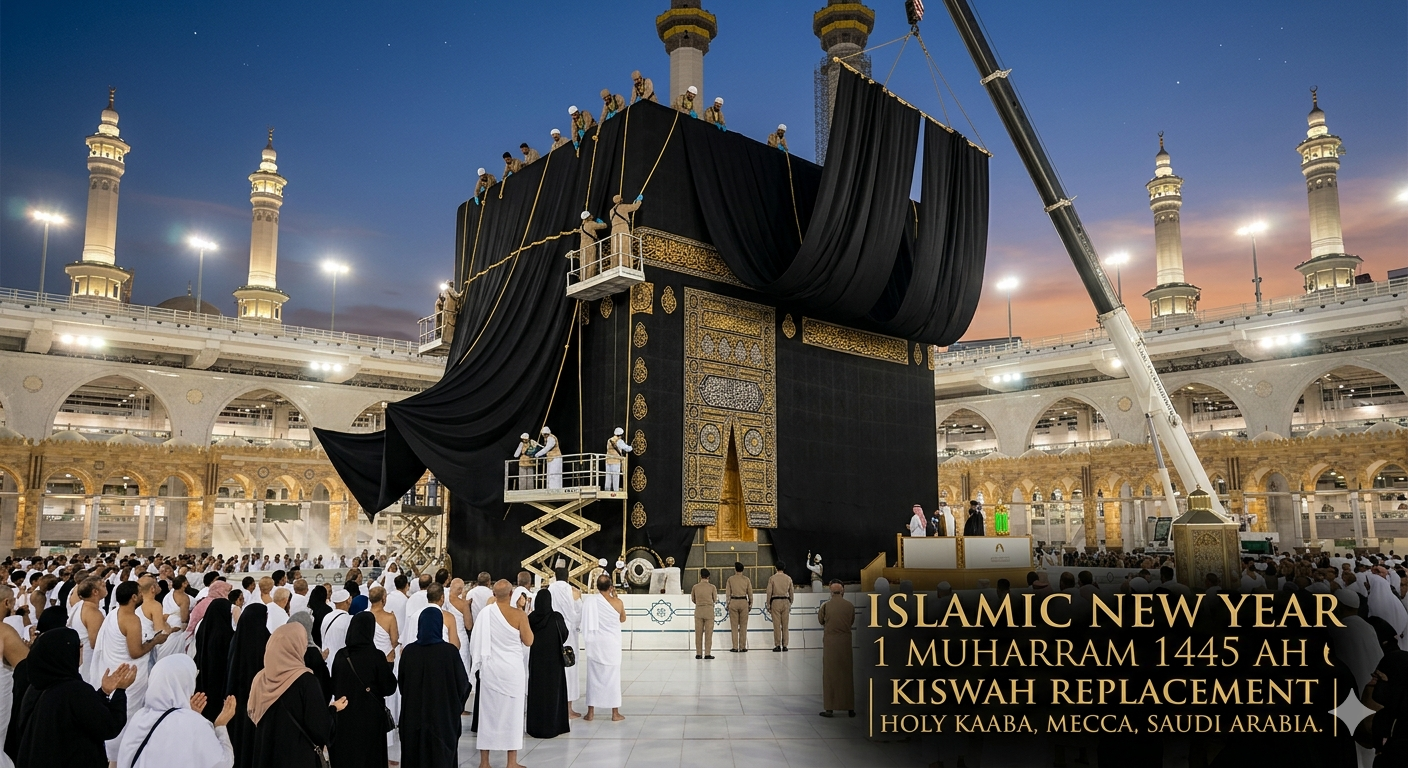
Holy Kaaba Receives New Kiswa as Islamic New Year Begins
The Holy Kaaba in Makkah has once again been adorned with its new Kiswa, marking the beginning of the Islamic New Year. This annual tradition is one of the most significant religious ceremonies in Islam, symbolizing renewal, devotion, and continuity of faith. The replacement of the Kiswa transforms the appearance of the Kaaba while carrying deep spiritual meaning for Muslims worldwide.
The event is carried out every year with great care, precision, and respect. It reflects centuries of tradition and highlights the importance of preserving Islamic heritage through carefully maintained rituals.
What Is the Kiswa?
The Kiswa is the large black silk cloth that covers the Holy Kaaba at the center of Masjid al-Haram in Makkah. It is one of the most recognized symbols in Islam and holds immense religious significance.
The cloth is made from high-quality black silk and decorated with Quranic verses embroidered in gold and silver thread. These inscriptions are crafted with extreme precision, reflecting both artistic excellence and spiritual devotion.
Each year, a new Kiswa is prepared and installed to replace the old covering, continuing a tradition that has been preserved for centuries.
Annual Replacement Ceremony
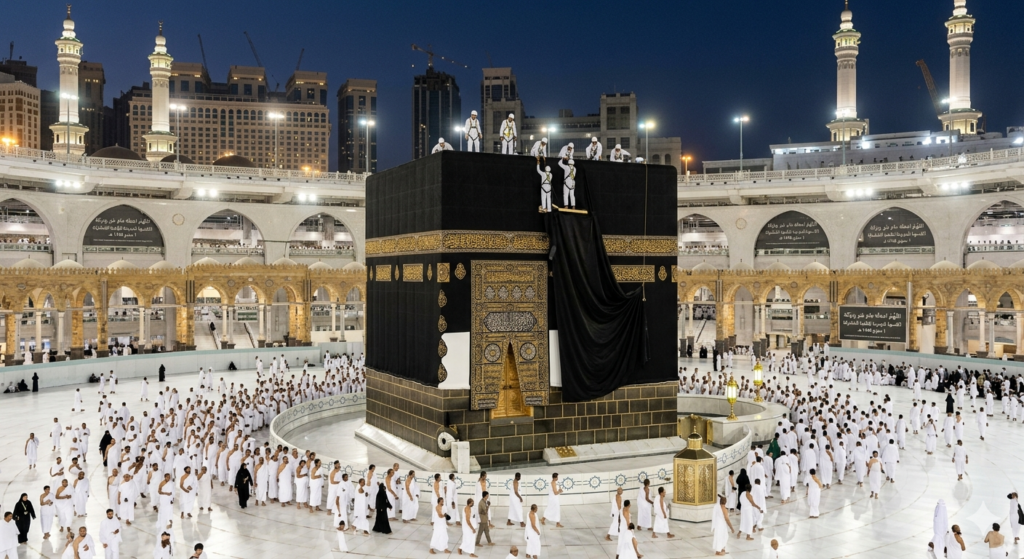
The replacement of the Kiswa is a highly organized annual process that involves several carefully executed steps including removing the old covering, preparing the new cloth, lifting it into position, and securing it around the Kaaba.
Skilled workers ensure that every section is placed accurately and that the Quranic inscriptions are properly aligned. The process is done with strict attention to detail due to the sacred nature of the structure.
The ceremony reflects discipline, coordination, and deep respect for one of Islam’s holiest sites.
Significance of the Islamic New Year
The Islamic New Year, also known as the Hijri New Year, marks the beginning of the lunar calendar in Islam. It is a time of reflection, remembrance, and spiritual renewal.
The arrival of the new Kiswa during this period adds deeper meaning to the occasion. It symbolizes renewal of faith, continuation of tradition, unity of Muslims, and a fresh spiritual beginning.
For many Muslims, this moment serves as a reminder of the importance of faith and devotion in everyday life.
How the Kiswa Is Made
The production of the Kiswa is a detailed and time-consuming process carried out in specialized facilities in Makkah.
High-quality black silk is first prepared and woven under strict conditions. Quranic verses are then designed and carefully embroidered using gold and silver threads. Each design is stitched with precision to ensure accuracy and durability.
After embroidery, large fabric panels are stitched together to form the complete covering. The final product undergoes thorough inspection before being sent for installation on the Kaaba.
This process requires highly skilled artisans and reflects a blend of traditional craftsmanship and modern techniques.
Historical Importance
The tradition of covering the Kaaba dates back many centuries and has been maintained throughout Islamic history. Although materials and methods have evolved, the purpose has remained unchanged: honoring the Kaaba with a sacred covering.
In earlier times, different materials were used depending on available resources, but over time, silk and embroidered designs became the standard. Today, the process is carried out in a dedicated facility that ensures quality and consistency every year.
Spiritual Importance
The Kaaba is the most sacred site in Islam and serves as the Qibla, the direction Muslims face during prayer.
The Kiswa represents unity, devotion, purity, and connection to faith. It is a powerful symbol that reminds Muslims of their shared beliefs and spiritual identity.
The annual replacement is seen as a moment of reflection and renewal for the global Muslim community.
Symbolism of Renewal
The installation of a new Kiswa is not just a physical replacement but also a symbolic act. It represents renewal of faith, continuation of tradition, and spiritual cleansing.
It reminds believers of the importance of starting fresh, strengthening faith, and maintaining devotion throughout the year.
Conclusion
The arrival of the new Kiswa on the Holy Kaaba at the beginning of the Islamic New Year is a deeply meaningful event in the Islamic world. It combines centuries of tradition, spiritual symbolism, and meticulous craftsmanship.
The ceremony continues to inspire Muslims globally, reinforcing the Kaaba’s role as the center of Islamic worship and unity.
FAQs
What is the Kiswa
The Kiswa is the black silk covering placed over the Holy Kaaba in Makkah.
Why is the Kiswa replaced every year
It is replaced annually as part of a long-standing Islamic tradition to honor the Kaaba.
Who makes the Kiswa
It is produced by skilled artisans in specialized facilities in Makkah.
What is the Kiswa made of
It is made of black silk decorated with gold and silver embroidered Quranic verses.
Why is the Kaaba important in Islam
The Kaaba is the holiest site in Islam and the direction Muslims face during prayer.
What does the Islamic New Year represent
It marks the beginning of the Hijri calendar and symbolizes renewal and reflection.
Learn Quran Online with Certified Tutors in California
Start Your Quran Learning Journey Today with Makki Academy — Book a Free Trial Class and Learn from Certified Male & Female Quran Tutors at Your Convenience Across California and the United States. Flexible One-on-One Online Quran Classes for Kids & Adults in PST Time Zone