
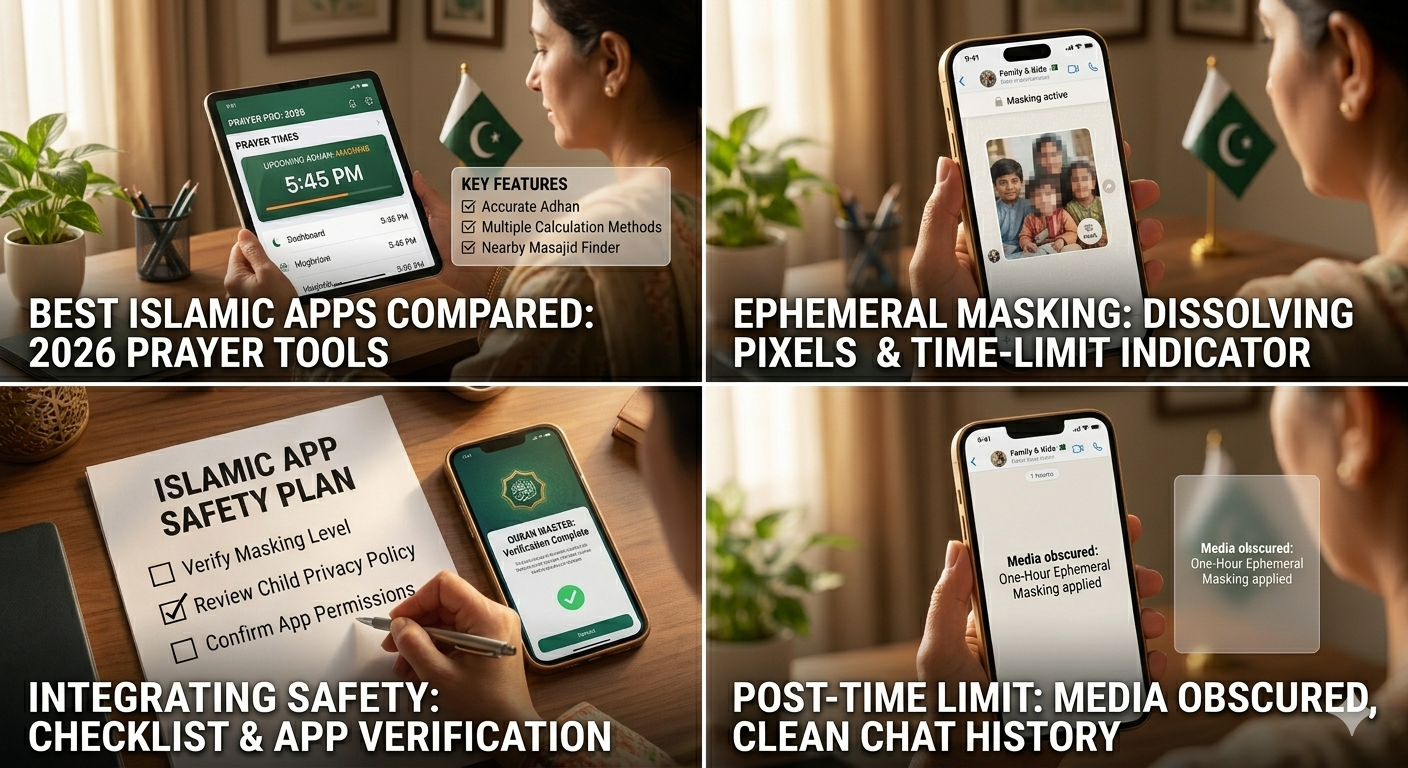
One App for Everything? The Best Islamic Tools Compared
In recent years, Islamic mobile apps have become essential daily tools for millions of Muslims worldwide. Instead of relying on separate apps for prayer times, Qibla direction, Quran reading, and duas, many users now prefer all-in-one platforms that combine everything in a single interface.
The idea is simple: one app that supports your daily worship without switching between multiple tools. But in practice, these apps vary widely in quality, features, and user experience. Some focus on simplicity and accuracy, while others try to include everything—from Quran recitation to halal restaurant finders and AI features.
This comparison highlights how modern Islamic apps are evolving in 2026 and what users should realistically expect from an “all-in-one” Islamic tool.
What Users Actually Expect From Islamic Apps
Most users don’t need dozens of features. Instead, they want three core functions to work reliably:
- Accurate prayer times with notifications
- Qibla direction that is easy and precise
- A clean Quran reading experience
Anything beyond that—like hadith libraries, dua collections, or Islamic calendars—is useful but secondary. The real challenge is not adding features, but keeping the app fast, simple, and dependable throughout the day.
Many all-in-one apps fail not because they lack features, but because they become cluttered and slow during the most important moments of daily worship.
Muslim Pro: The Most Complete All-in-One Option
Muslim Pro remains one of the most widely used Islamic apps globally due to its extensive feature set and long-standing presence.
It includes:
- Prayer times with adhan alerts
- Full Quran with translations and audio
- Qibla compass
- Hijri calendar
- Islamic content and additional lifestyle tools
Its strength is coverage—it tries to include everything in one place. However, the downside is complexity. The interface can feel heavy, and the app experience is more feature-driven than spiritually minimal.
Despite this, it remains a default choice for users who want maximum functionality in a single app.
Athan (IslamicFinder): Reliable and Balanced
Athan is known for its stability and consistent performance. It focuses on the essentials while still offering additional Islamic tools.
Key features include:
- Accurate prayer time notifications
- Qibla direction
- Quran reading access
- Dua and Islamic calendar tools
Its biggest advantage is reliability. It is not overloaded with unnecessary features, and it works well across regions. However, it does include ads in its free version, which can affect user experience during daily usage.
Pillars: Focused on Prayer Habits
Pillars takes a different approach compared to traditional Islamic apps. Instead of trying to include everything, it focuses on building consistent prayer habits.
It emphasizes:
- Salah tracking
- Prayer consistency streaks
- Simple prayer time reminders
- Habit-building tools
This makes it especially useful for users who want structure and accountability rather than a large feature set.
IslamicFinder: Strong Data Coverage
IslamicFinder has been around for years and is widely trusted for prayer timing accuracy and location-based data.
Its strengths include:
- Reliable global prayer time database
- Qibla direction tools
- Quran access
- Web and mobile availability
It is especially useful in regions where other apps may struggle with accurate local timing configurations.
New-Generation Islamic Apps: AI and Personalization
A new wave of Islamic apps is now integrating AI features, personalization, and interactive learning tools.
These include:
- AI-based Quran explanations
- Personalized dhikr suggestions
- Guided Islamic learning experiences
- Community-driven mosque data
- Offline-first privacy-focused tools
Recent reviews show a strong trend toward combining spiritual tools with intelligent assistance, although concerns remain about accuracy, privacy, and over-reliance on automation.
The Real Problem With “All-in-One” Apps
While the idea of a single Islamic super-app is attractive, it comes with trade-offs:
1. Feature Overload
Too many tools make apps harder to navigate.
2. Performance Issues
Heavier apps can slow down during prayer times or notifications.
3. Privacy Concerns
Some large apps have faced scrutiny regarding user data handling.
4. Distraction Risk
Extra features can shift focus away from core worship needs.
This is why many users eventually prefer a combination of one simple prayer app and one dedicated Quran app instead of relying on a single platform.
Which Type of App Is Best for You?
Different users benefit from different setups:
- Minimal users: prayer time + Qibla only apps
- Regular users: balanced apps like Athan or IslamicFinder
- Advanced users: full-feature apps like Muslim Pro
- Focused learners: Quran-specific apps like Quran.com or Tarteel
There is no single “best” option—the right choice depends on how you interact with daily Islamic tools.
Conclusion
The idea of “one app for everything” in Islamic tools is becoming more realistic each year, but it is still a balance between convenience and simplicity. Apps like Muslim Pro and Athan show how far the category has come, while newer AI-powered platforms are pushing the boundaries further.
However, the most effective setup for most users is still a focused approach: reliable prayer times, a clean Quran reader, and minimal distractions.
As Islamic apps continue to evolve in 2026, the challenge will not just be adding features—but preserving clarity, trust, and ease of use in daily worship.
FAQs
What is the best all-in-one Islamic app?
Muslim Pro is one of the most complete options, while Athan offers a more balanced and simpler experience.
Do Islamic apps include Quran reading?
Yes, most major Islamic apps include Quran reading with translations and audio recitations.
Why do some Islamic apps show ads?
Ads help support free versions, but premium versions often remove them.
What is the most important feature in Islamic apps?
Accurate prayer times and Qibla direction are the most essential features.
Are AI features useful in Islamic apps?
AI tools are becoming more common, but they should be used carefully to ensure accuracy and authenticity.
Should I use one app or multiple apps?
Many users prefer one prayer app combined with a dedicated Quran app for better performance and focus.
Start Your Free 3-Day Online Quran Classes in USA
Join our online Quran academy in California and experience one-on-one Quran learning with expert tutors. Improve Quran reading, Tajweed, and memorization with flexible class timings designed for California students.
No registration fee • No upfront payment • 100% risk-free