
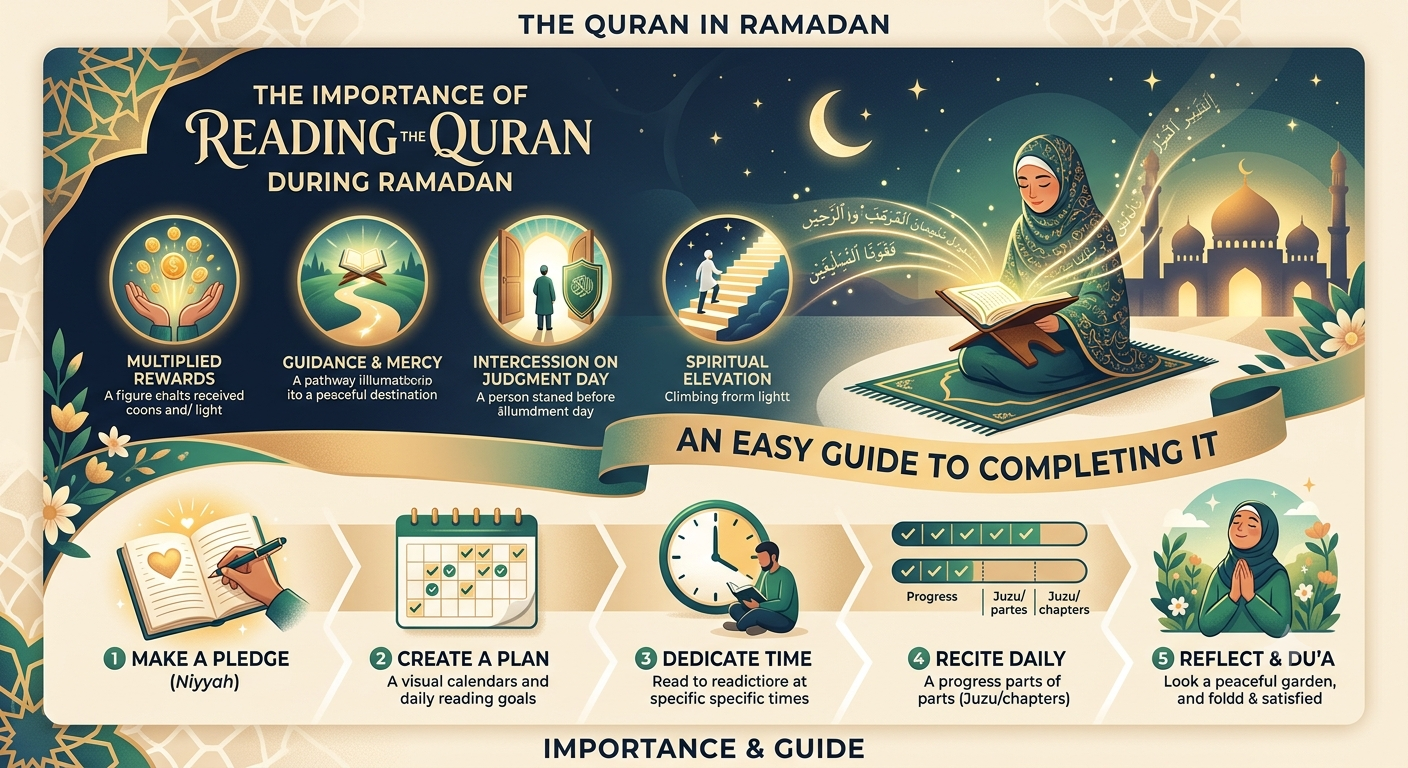
The Importance of Reading the Quran During Ramadan and an Easy Guide to Completing It
Ramadan is a month of mercy, forgiveness, and spiritual renewal. While fasting is one of its most recognized acts of worship, the month also holds a unique connection with the Holy Quran, as it was during Ramadan that Allah revealed the Quran as guidance for humanity. This makes Ramadan the ideal time for Muslims to strengthen their relationship with the Book of Allah through regular recitation, reflection, and implementation of its teachings.
Many Muslims set a goal of completing the Quran at least once during Ramadan. Although this may seem challenging, a simple reading plan and consistent daily effort can make it achievable. More importantly, Ramadan encourages believers not only to finish the Quran but also to understand its message and apply it in their lives.
Why Ramadan Is the Month of the Quran
Allah says in the Quran:
“The month of Ramadan is that in which the Quran was revealed as guidance for mankind and clear proofs of guidance and criterion.” (Surah Al-Baqarah 2:185)
This verse highlights the special relationship between Ramadan and the Quran. Because the revelation began during this blessed month, Muslims dedicate extra time to reciting and reflecting on Allah’s words.
Throughout Ramadan, mosques around the world hold Taraweeh prayers in which large portions of the Quran are recited each night, allowing worshippers to listen to the entire Quran over the course of the month.
Spiritual Benefits of Reading the Quran During Ramadan
Reading the Quran during Ramadan offers numerous spiritual rewards.
Some of the key benefits include:
- Strengthening faith in Allah.
- Increasing mindfulness and patience.
- Receiving abundant rewards for every letter recited.
- Finding peace and comfort through Allah’s guidance.
- Developing a deeper understanding of Islam.
- Building a lifelong habit of Quran recitation.
The Prophet Muhammad (peace be upon him) taught that every letter of the Quran earns reward, encouraging believers to recite regularly throughout the year, especially during Ramadan.
The Quran Brings Inner Peace
Modern life often brings stress, anxiety, and distractions. Spending time with the Quran helps believers reconnect with Allah and find inner peace.
Reciting verses with concentration allows the heart to slow down, reflect, and remember Allah. Even reading a few pages daily can bring comfort and renewed hope during difficult times.
Many Muslims describe Quran recitation as one of the most calming acts of worship during Ramadan.
Reflection Is Just as Important as Recitation
Completing the Quran is a wonderful goal, but understanding its message is equally important.
Rather than rushing through pages, take time to:
- Read a translation if you do not understand Arabic.
- Study brief explanations (Tafsir).
- Reflect on how each verse applies to your life.
- Make dua after reading verses that inspire you.
The Quran was revealed as guidance, and reflection helps transform its teachings into daily actions.
An Easy Guide to Completing the Quran During Ramadan
Many people think finishing the Quran in one month is difficult, but breaking it into smaller portions makes the goal much easier.
Read One Juz Each Day
The Quran contains 30 Juz (sections).
Reading:
- 1 Juz every day
allows you to complete the Quran by the end of Ramadan.
This is the simplest and most widely followed plan.
Break Your Reading into Five Sessions
Instead of reading one Juz in a single sitting, divide it throughout the day.
A standard Madani Mushaf contains about 20 pages per Juz.
Read:
- 4 pages after Fajr
- 4 pages after Dhuhr
- 4 pages after Asr
- 4 pages after Maghrib
- 4 pages after Isha
By the end of the day, you will have completed one Juz without feeling overwhelmed.
Choose the Best Time to Read
Everyone has different schedules.
Many Muslims find these times especially beneficial:
- After Fajr prayer
- Before Suhoor
- Before breaking the fast
- After Taraweeh
- Before sleeping
Choose a quiet time when you can focus without distractions.
Set Realistic Goals
Not everyone reads at the same pace.
If completing the Quran feels difficult, begin with smaller targets.
For example:
- Read 10 pages daily.
- Increase gradually each week.
- Focus on consistency rather than speed.
Remember that sincere effort is highly valued in Islam.
Read With Understanding
Reading without understanding may limit the impact of the Quran.
You can deepen your connection by:
- Reading a trusted translation.
- Studying Tafsir.
- Listening to scholarly explanations.
- Reflecting on one lesson after every reading session.
This approach helps transform recitation into practical guidance for everyday life.
Listen to Quran Recitation
Listening to skilled Quran reciters can improve pronunciation and concentration.
Many Muslims combine listening with reading from the Mushaf to strengthen both fluency and understanding.
Audio recitation is especially helpful during travel or while completing daily tasks.
Use Digital Quran Apps
Technology has made Quran reading more accessible than ever.
Many apps offer:
- Arabic text
- Multiple translations
- Tafsir
- Audio recitation
- Bookmarks
- Daily reminders
- Progress tracking
These tools can help maintain consistency throughout Ramadan.
Read Together as a Family
Ramadan is an excellent opportunity to build family habits around the Quran.
Parents can:
- Read with children.
- Discuss short Surahs.
- Share daily reflections.
- Encourage memorization.
- Motivate one another to stay consistent.
Reading together strengthens both family relationships and spiritual growth.
Don’t Be Discouraged If You Miss a Day
Many people fall behind due to work, travel, illness, or family responsibilities.
Instead of giving up:
- Resume your schedule.
- Read a little extra when possible.
- Stay consistent.
- Focus on sincerity rather than perfection.
The goal is to strengthen your relationship with Allah through His Book.
Applying the Quran Beyond Ramadan
The habits developed during Ramadan should continue after the month ends.
Try to:
- Read a few verses daily.
- Continue studying Tafsir.
- Memorize short Surahs.
- Practice Quranic teachings.
- Reflect regularly on Allah’s guidance.
Maintaining this connection throughout the year helps preserve the spiritual benefits gained during Ramadan.
Common Mistakes to Avoid
While striving to complete the Quran, avoid these common mistakes:
- Reading too quickly without reflection.
- Skipping daily recitation.
- Focusing only on completion rather than understanding.
- Losing motivation after missing a day.
- Ignoring the practical lessons of the Quran.
A balanced approach combining recitation, understanding, and implementation brings the greatest benefit.
Conclusion
Reading the Quran during Ramadan is one of the greatest acts of worship a Muslim can perform. Since the Quran was revealed during this blessed month, Ramadan offers a unique opportunity to reconnect with Allah’s words, strengthen faith, and develop lifelong habits of worship. By following a simple daily reading plan, dividing the Quran into manageable portions, and reflecting on its meanings, completing the Quran becomes an achievable and deeply rewarding goal. Most importantly, the objective is not merely to finish reading the Quran but to allow its guidance to transform our hearts, character, and daily lives.
Frequently Asked Questions (FAQs)
Why is reading the Quran important during Ramadan?
Ramadan is the month in which the Quran was revealed, making it the best time to increase recitation, reflection, and worship.
How can I complete the Quran during Ramadan?
The easiest method is to read one Juz each day or approximately 20 pages daily, which can be divided into smaller sessions after each prayer.
What if I cannot read Arabic fluently?
You can read a reliable translation, listen to audio recitations, and gradually improve your Arabic while benefiting from the Quran’s message.
Is understanding the Quran more important than simply finishing it?
Both are valuable, but understanding and applying the Quran’s teachings helps believers benefit more deeply from its guidance.
Can I listen to the Quran instead of reading?
Listening is highly beneficial, especially when combined with reading the Arabic text or translation to improve understanding.
What is the best time to read the Quran during Ramadan?
Many people prefer reading after Fajr, before Iftar, after Taraweeh, or before sleeping, but any consistent time works well.
Start Your Quran Journey with Makki Academy
If you’ve been thinking about building a stronger connection with the Qur’an, this is your moment.
Makki Academy is now helping students across Canada and other countries learn the Qur’an online with experienced teachers, flexible timings, and a supportive environment — all from the comfort of your home.
Whether you want to:
- Learn to read the Qur’an properly
- Improve your Tajweed
- Help your children start their Islamic journey
Makki Academy is here to guide you every step of the way.
The best part? You can start today with a FREE 3-day trial.
No commitment — just experience the quality of teaching yourself.
Don’t wait for “someday.”
Take the first step now and bring the Qur’an into your daily life.
Book your course today with Makki Academy and begin your journey with the Qur’an