
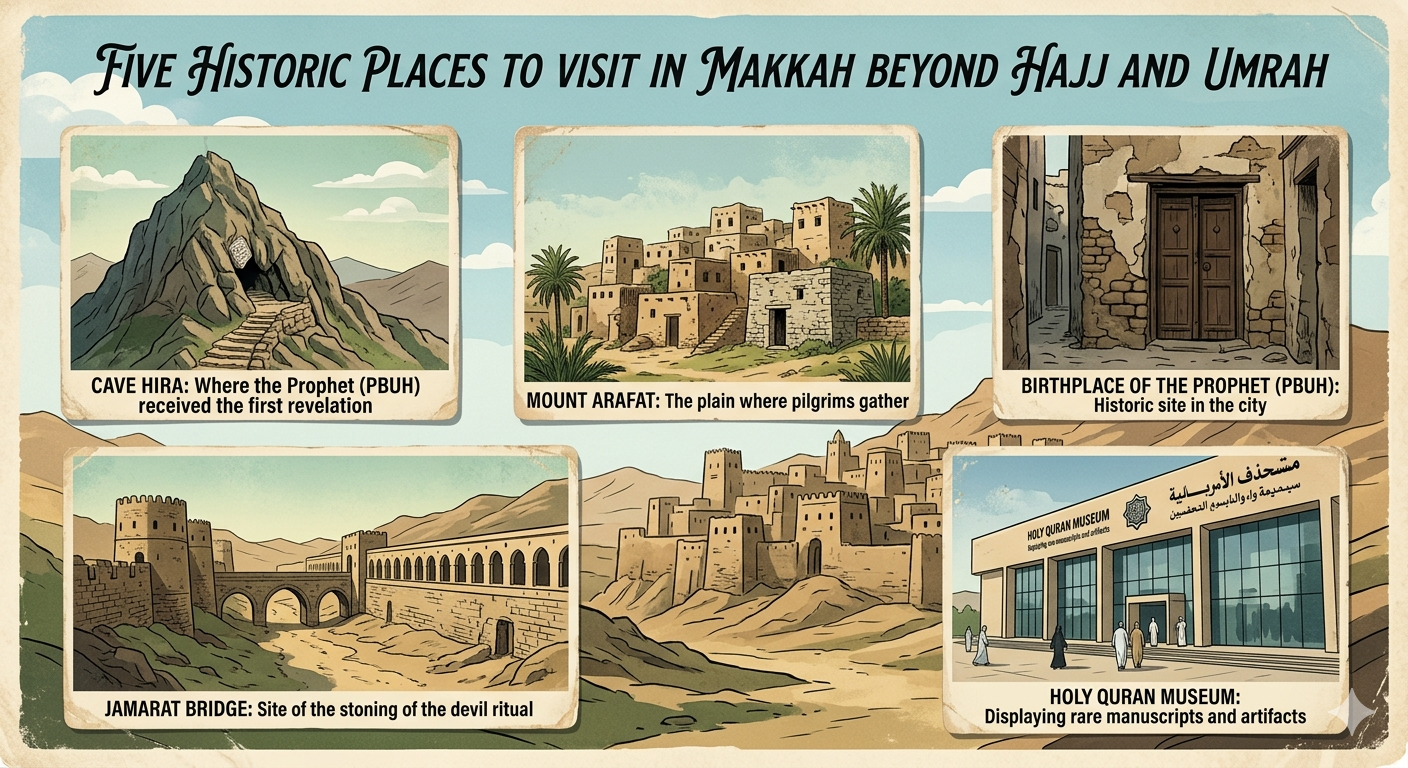
From Cave Hira to Holy Quran Museum: Five Historic Places to Visit in Makkah Beyond Hajj and Umrah
Makkah is one of the most sacred cities in the world, primarily known for Hajj and Umrah. However, beyond these religious pilgrimages, the city is also home to several historic and spiritual landmarks that hold deep cultural, Islamic, and historical significance. These sites offer visitors a chance to connect with Islamic history and explore the origins of key events that shaped the faith.
From the famous Cave Hira to the educational Holy Quran Museum, Makkah offers meaningful experiences for pilgrims and tourists who wish to explore beyond traditional rituals. These locations provide insight into the life of Prophet Muhammad (PBUH), early Islamic revelations, and the development of Islamic heritage.
1. Cave Hira (Jabal al-Noor)
Cave Hira is one of the most significant historical sites in Islam. Located in Jabal al-Noor (Mountain of Light), it is where Prophet Muhammad (PBUH) received the first revelation of the Holy Quran from Angel Jibreel (Gabriel).
The cave is small and situated high on a mountain, requiring a physically challenging climb to reach it. Despite the difficulty, many visitors undertake the journey to experience the spiritual atmosphere and reflect on the moment that marked the beginning of Islamic revelation.
Key highlights of Cave Hira include:
- Location of the first Quranic revelation
- Historical and spiritual significance
- Panoramic view of Makkah from the mountain
- Deep emotional and reflective experience
2. Jannat al-Mu’alla Cemetery
Jannat al-Mu’alla is one of the oldest and most important cemeteries in Islamic history, located near the Grand Mosque in Makkah.
Many members of the Prophet Muhammad’s (PBUH) family and close companions are buried here, making it a deeply respected site for visitors.
Significance of Jannat al-Mu’alla:
- Burial place of early Islamic figures
- Historical connection to the Prophet’s family
- A place of reflection and remembrance
- Important site in early Islamic history
Visitors often visit to pay respects and reflect on the early generations of Islam.
3. Cave Thawr (Ghar Thawr)
Cave Thawr is another important historical location situated in a mountain south of Makkah. It is known for the event when Prophet Muhammad (PBUH) and his companion Abu Bakr (RA) took refuge during the migration (Hijrah) to Madinah.
According to Islamic tradition, they stayed in the cave for three days while being protected during a time of danger.
Key features include:
- Linked to the Hijrah journey
- Symbol of faith, patience, and divine protection
- Located in a mountainous area requiring a hike
- Strong historical and emotional significance
4. Masjid al-Jinn
Masjid al-Jinn is one of the unique mosques in Makkah, named after the event where a group of jinn reportedly listened to the recitation of the Holy Quran and accepted Islam.
It is considered one of the oldest mosques in the city and holds a special place in Islamic tradition.
Highlights include:
- Historical connection to Quranic revelation
- Unique spiritual significance
- One of the oldest mosques in Makkah
- Important site in Islamic narratives
Visitors often stop here to learn about the lesser-known events in Islamic history.
5. Holy Quran Museum
The Holy Quran Museum is a modern educational destination in Makkah that showcases the history, preservation, and manuscripts of the Holy Quran.
It offers visitors an opportunity to learn about how the Quran has been preserved over centuries, including rare copies, calligraphy, and historical exhibits.
Key attractions include:
- Ancient Quran manuscripts
- Interactive educational exhibits
- Islamic calligraphy displays
- Historical preservation of the Quran
- Cultural and educational experience
This museum provides a deeper understanding of the Quran’s historical journey and its significance in Islamic civilization.
Spiritual and Historical Importance of These Sites
Together, these locations offer a broader understanding of Islamic history beyond the rituals of Hajj and Umrah. They help visitors connect with:
- The life of Prophet Muhammad (PBUH)
- Early Islamic events
- The revelation of the Quran
- The struggles and journey of early Muslims
- The preservation of Islamic heritage
For many visitors, exploring these sites adds emotional depth and historical awareness to their spiritual journey in Makkah.
Conclusion
Makkah is not only the heart of Islamic pilgrimage but also a city rich in history, spirituality, and education. From the sacred Cave Hira to the informative Holy Quran Museum, these five historic places provide meaningful insights into Islamic heritage.
Visiting these sites beyond Hajj and Umrah allows pilgrims and tourists to better understand the foundations of Islam and the remarkable events that shaped its early history. Each location offers a unique experience that blends spirituality, reflection, and learning.
FAQs
What is Cave Hira and why is it important?
Cave Hira is where Prophet Muhammad (PBUH) received the first revelation of the Holy Quran, making it one of the most important sites in Islam.
Can visitors climb Jabal al-Noor to reach Cave Hira?
Yes, but the climb is steep and physically demanding, requiring preparation and caution.
What is Jannat al-Mu’alla?
It is an ancient cemetery in Makkah where many members of the Prophet’s family and early Muslims are buried.
Why is Cave Thawr significant?
It is where Prophet Muhammad (PBUH) and Abu Bakr (RA) took refuge during their migration to Madinah.
What happens at Masjid al-Jinn?
It is believed that a group of jinn listened to the Quran being recited and accepted Islam at this location.
Learn Quran Online with Certified Tutors in California
Start Your Quran Learning Journey Today with Makki Academy — Book a Free Trial Class and Learn from Certified Male & Female Quran Tutors at Your Convenience Across California and the United States. Flexible One-on-One Online Quran Classes for Kids & Adults in PST Time Zone