
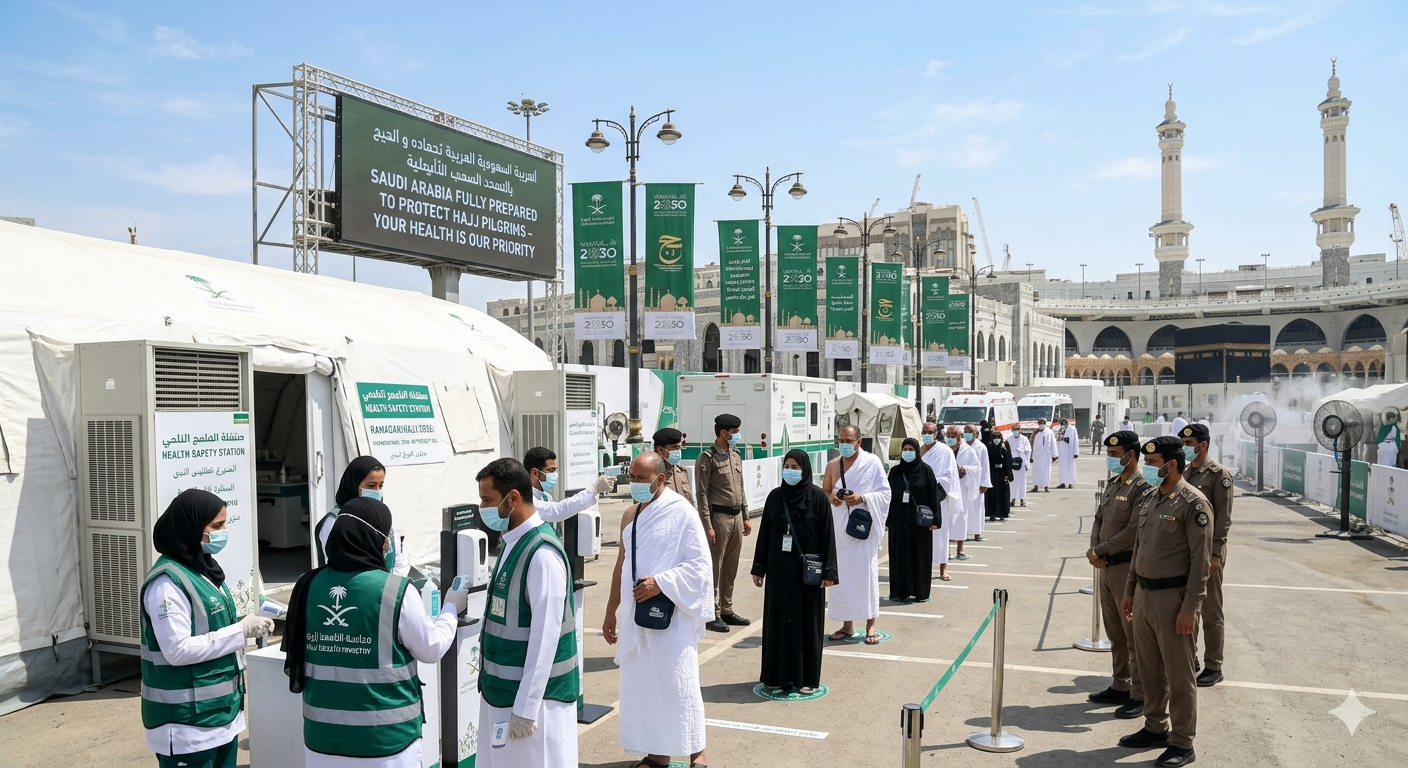
Saudi Arabia Says It Is “Fully Prepared” to Protect Hajj Pilgrims Amid Global Virus Concerns
Introduction
As millions of Muslims prepare for the annual Hajj pilgrimage, Saudi Arabia has announced that it is fully prepared to ensure the safety and health of pilgrims arriving in the Kingdom. The statement comes amid rising global concerns over infectious disease outbreaks and public health risks affecting international travel.
According to reports, Saudi health authorities have strengthened surveillance systems, medical infrastructure, and entry screening procedures to protect an estimated 1.5 million pilgrims expected to perform Hajj this year. The Kingdom emphasized that safeguarding pilgrims remains its top priority during one of the largest annual religious gatherings in the world.
The announcement reflects Saudi Arabia’s ongoing effort to balance religious responsibility with global health preparedness in a time of increasing epidemic threats.
Saudi Arabia’s Official Health Preparedness Plan
Saudi health officials have confirmed that extensive preparations have been completed ahead of the pilgrimage season. The Ministry of Health and the Public Health Authority have jointly implemented a comprehensive system designed to prevent the spread of infectious diseases during Hajj.
Authorities stated that:
- Epidemiological surveillance systems are fully operational
- Medical screening has been intensified at all entry points
- Health facilities have been expanded near holy sites
- Emergency response teams are on standby
- Preventive vaccination requirements are strictly enforced
Officials emphasized that the system is designed to detect potential outbreaks early and prevent transmission among the massive crowds that gather in Makkah and surrounding holy sites.
The government has repeatedly stated that the safety of pilgrims is a “national priority” and that all necessary measures have been taken to ensure a secure pilgrimage experience.
Global Virus Concerns and Their Impact on Hajj
The announcement comes at a time when global health authorities are closely monitoring outbreaks of infectious diseases in various regions. While no major epidemic has been reported among pilgrims, concerns remain due to the nature of Hajj itself.
Hajj is one of the largest annual mass gatherings in the world, bringing together people from more than 180 countries. This creates a high-risk environment for the spread of respiratory and viral infections.
Health experts warn that:
- Dense crowds increase transmission risks
- Pilgrims often come from regions with different health conditions
- International travel increases exposure to pathogens
- Elderly pilgrims are more vulnerable to complications
Because of these factors, Saudi Arabia has historically maintained strict health regulations, including vaccination requirements and health screenings.
Vaccination and Entry Requirements for Pilgrims
Saudi Arabia has implemented strict medical requirements for all pilgrims entering the Kingdom. These measures are designed to reduce the risk of infectious disease transmission during the pilgrimage.
Key health requirements include:
- Proof of COVID-19 vaccination (as per updated guidelines)
- Meningococcal meningitis vaccination certificate
- Polio vaccination for certain regions
- Medical fitness certification from approved authorities
- Declaration of absence of serious chronic diseases
These rules apply to both international and domestic pilgrims.
Health officials also recommend additional vaccinations depending on the pilgrim’s country of origin and recent global health alerts.
Strengthened Surveillance and Early Warning Systems
One of the most important aspects of Saudi Arabia’s preparedness strategy is its advanced disease surveillance system.
The Kingdom has invested heavily in:
- Real-time health monitoring systems
- Digital reporting tools for hospitals and clinics
- Early warning mechanisms for outbreak detection
- Rapid testing facilities near pilgrimage zones
These systems are designed to identify potential outbreaks at an early stage and respond quickly before they spread.
Officials stated that epidemiological teams are monitoring health data continuously throughout the pilgrimage period.
Medical Infrastructure and Emergency Response
Saudi Arabia has significantly expanded its medical infrastructure to handle the large influx of pilgrims.
According to health authorities, preparations include:
- Hundreds of ambulances deployed across Makkah and Mina
- Dozens of field hospitals and medical centers
- Specialized heatstroke and emergency units
- Mobile medical teams stationed along pilgrimage routes
- Thousands of trained healthcare workers on duty
These facilities are strategically placed to ensure rapid response in case of medical emergencies.
The Ministry of Health also coordinates with international health organizations to maintain global safety standards during the pilgrimage.
Managing Heat and Environmental Risks
In addition to virus concerns, Saudi Arabia also faces environmental challenges during Hajj, particularly extreme heat.
Temperatures in Makkah can rise significantly during pilgrimage season, increasing the risk of heat exhaustion and dehydration.
To address this, authorities have introduced:
- Shaded walkways along major routes
- Cooling stations with air circulation systems
- Distribution of water and hydration points
- Emergency cooling tents for heatstroke cases
Health experts warn that climate conditions are becoming increasingly challenging due to rising global temperatures, making such preventive measures more important than ever.
Crowd Control and Security Measures
Beyond health concerns, Saudi Arabia also maintains strict crowd management systems to ensure safety during Hajj rituals.
Authorities have implemented:
- Controlled entry and exit points at holy sites
- Electronic identification systems for pilgrims
- Timed movement schedules for rituals
- Heavy security deployment to prevent overcrowding
These measures are designed to prevent stampedes and ensure smooth movement during peak ritual periods such as Tawaf and Arafat gatherings.
The Importance of Hajj in Global Context
Hajj is one of the Five Pillars of Islam and a mandatory religious duty for Muslims who are physically and financially able to perform it at least once in their lifetime.
Every year:
- Over 1.5 to 2 million pilgrims participate
- People from more than 180 countries attend
- The event lasts several days of intense rituals
- It represents unity, equality, and spiritual renewal
Due to its scale, Hajj is considered one of the most complex logistical operations in the world.
Saudi Arabia has spent decades developing infrastructure to manage housing, transport, sanitation, and healthcare for pilgrims.
Historical Lessons from Past Health Crises
The Kingdom’s current preparedness strategy is built on lessons learned from previous global health crises, including COVID-19.
During the pandemic:
- Hajj capacity was significantly reduced
- Strict health screening was enforced
- Vaccination became mandatory
- Social distancing measures were implemented
These experiences shaped modern health protocols that are still in place today.
Experts believe that the pandemic permanently changed how mass gatherings like Hajj are managed, with a stronger focus on digital monitoring and preventive healthcare.
International Cooperation and Monitoring
Saudi Arabia works closely with international health organizations to ensure global safety during Hajj.
This includes:
- Sharing disease surveillance data
- Coordinating with World Health Organization guidelines
- Monitoring outbreaks in pilgrims’ home countries
- Implementing travel advisories when needed
This international cooperation helps reduce the risk of cross-border disease transmission.
Public Assurance from Saudi Authorities
Saudi health officials have reassured pilgrims and the global Muslim community that all necessary precautions have been taken.
They emphasized:
- No current epidemic threat has been detected among pilgrims
- Medical systems are fully ready for emergencies
- Preventive measures are continuously updated
- Safety protocols are strictly enforced
The government stated that it remains committed to providing a safe and spiritually fulfilling Hajj experience for all participants.
Conclusion
Saudi Arabia’s declaration that it is “fully prepared” to protect Hajj pilgrims reflects both confidence and caution in the face of global health uncertainties. While no major outbreak has been reported, the Kingdom continues to strengthen its surveillance systems, medical infrastructure, and preventive measures to safeguard millions of worshippers.
Hajj remains one of the most significant religious gatherings in the world, and managing its safety requires constant innovation, coordination, and readiness.
As global health threats continue to evolve, Saudi Arabia’s approach highlights the importance of preparedness, technology, and international cooperation in protecting human life during mass gatherings.
FAQs
1. Why did Saudi Arabia announce special Hajj preparations?
Saudi Arabia made the announcement to reassure pilgrims amid global concerns about viral outbreaks and to highlight its health readiness.
2. How many pilgrims are expected for Hajj?
Approximately 1.5 million pilgrims are expected to participate in the pilgrimage.
3. What health measures are in place for Hajj pilgrims?
Measures include vaccination requirements, health screenings, surveillance systems, and emergency medical facilities.
4. Are there any virus outbreaks reported during Hajj?
No major outbreaks have been reported among pilgrims, according to authorities.
5. Why is Hajj considered a high-risk event for disease spread?
Because it gathers millions of people from around the world in dense environments, increasing infection risks.
Learn Quran Online with Certified Tutors in California
Start Your Quran Learning Journey Today with Makki Academy — Book a Free Trial Class and Learn from Certified Male & Female Quran Tutors at Your Convenience Across California and the United States. Flexible One-on-One Online Quran Classes for Kids & Adults in PST Time Zone